When I moved to Japan, there wasn't much online in the way of blogs or homemade websites. Sometimes I wonder how today's Internet might have changed things. Anyway, I'll try to convey here what it's like to live in Tokyo. Hopefully some useful information for visitors and newly-arrived expats, and for people thinking of moving here.
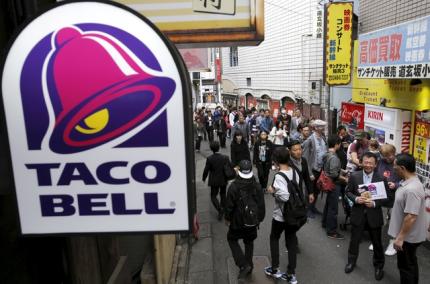
Taco Bell left Japan in the ‘80s, but Doritofied Tex-Mex-ish food made its triumphant return
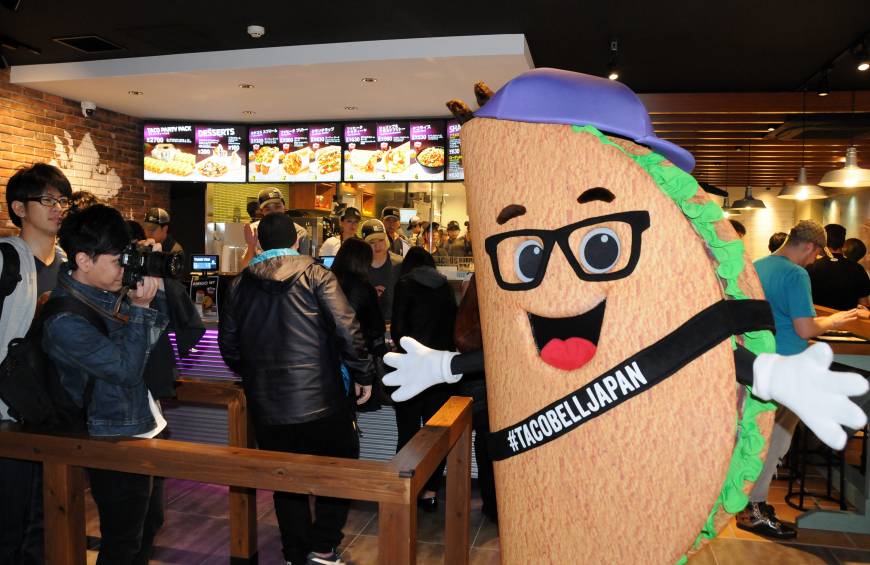
to the country yesterday with the opening of a much-hyped new Taco Bell
in Shibuya Ward, Tokyo’s equivalent of Times Square. Taco Bell
International president Melissa Lora tells the Japan Times the
brand felt 2015 was finally the year to head back because of “social
media and all the focus on new, interesting foods that are in the world
today.” (Many of which, of course, are owed to Taco Bell’s overworked R&D department.)
You
have to hand it to the Bell. The powers-that-be tend to know what
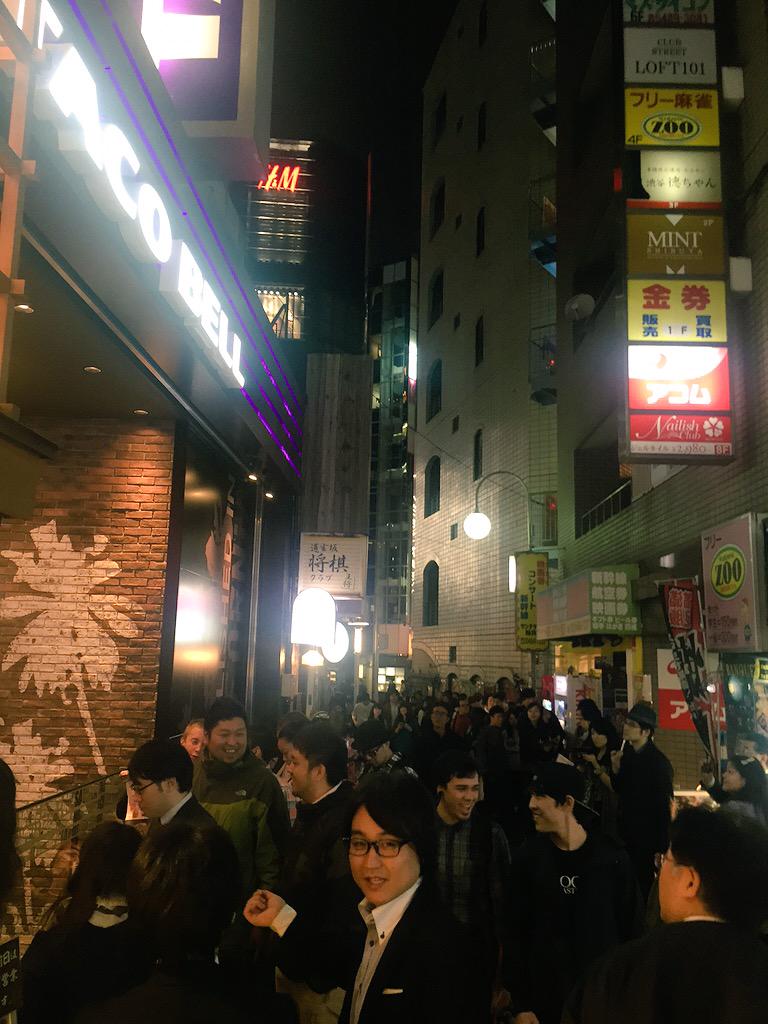
works, and based on the massive lines that formed outside Tokyo’s new
Taco Bell, the move is looking like yet another success — people just
can’t wait to try shrimp-and-avocado burritos, apparently.
(Bloomberg) -- Hisashi Tezuka knew his life had been spared when he heard the Emperor’s voice crackling through the wireless.
As Hirohito
announced Japan’s wartime surrender on Aug. 15, 1945, the young kamikaze
pilot was on a train to the island of Shikoku to carry out his
sacrificial mission. He received his orders just two days earlier at a
base about 1,150 kilometers (715 miles) to the north.
The crawling speed of the locomotive kept him alive.
“If
we’d been taken by plane, we’d have arrived before the war ended,”
Tezuka, now 93 and one of the few surviving kamikaze, said in an
interview at his home in Yokohama. “It was like fate intervened.”
Tezuka
was one of a few thousand men, some as young as 17, in Japan’s
so-called special attack unit, or tokkotai. Another was Tadamasa Iwai, a
94-year-old who trained to be a human torpedo and suicide diver. Both
had late reprieves, both saw the futility of the war, and both became
passionate pacifists.
This
is a year of painful remembrance for Japan as the country marks the 70th
anniversary of its surrender in World War II, a conflict that killed
more than 30 million people in Asia and left the nation in ruins. Prime
Minister Shinzo Abe has hinted he’ll omit descriptions of wartime
aggression in a statement for the anniversary, risking anger from
countries like China and South Korea that felt the brunt of Japanese
belligerence.
‘Prewar Regime’
Abe
is also seeking to loosen the restraints of the war-renouncing
constitution imposed by the U.S. and strengthen Japan’s role in global
security. Even so, polls show the Japanese public is deeply ambivalent
about adopting a more muscular foreign policy.
Fifty
percent of respondents to a survey published in the Nikkei newspaper on
Feb. 23 said they opposed legislation that would allow Japan’s military
to defend allies, while 31 percent supported the bills that are set to
be submitted to parliament in the next few months.
“I’m
concerned that Japanese politics and attitudes have shifted to the
right recently,” said Tezuka, whose wrinkles and stuttering walk betray
his years. “When Abe says he doesn’t want to dwell on the past, it’s
like he is returning to the prewar regime.”
As
China asserts its territorial claims in the East China Sea, Abe has
increased defense spending to a record, eased restrictions on weapons
exports and is seeking a constitutional workaround to be able to project
force abroad. His efforts are favored by the U.S., which is treaty
bound to defend Japan in the event of conflict, and have been denounced
by China and South Korea.
Even
though Iwai joked often during an interview at his small Tokyo
apartment, he became furious when talking about Japan’s current
political climate, for which he blamed the education system.
“They don’t
teach what really happened at schools,” he said. “Textbooks call it an
’advance’ rather than an ‘occupation’” by Japan.
Hit Rate
By
the summer of 1944, Japan’s weakened air force had become unable to
match the U.S., prompting commanders to develop the suicide strategy.
From October that year through to the final days of the war, Japan flew
2,550 kamikaze missions with a successful hit rate of 18.6 percent,
according to the U.S. Strategy Bombing Survey on the Pacific War. They
sank about 45 vessels, mostly destroyers, and damaged dozens more
including aircraft carriers and battleships.
At the time of
surrender, Japan had more than 9,000 aircraft available for kamikaze,
with over 5,000 fitted for attack, the survey said. About 6,400 men
died, a figure that includes those who perished in training, according
to the Tokkotai Commemoration Peace Memorial Association.
Three Choices Both men described the moment they knew their fate was in the hands of their commanders.
One
day in training, Tezuka was handed a questionnaire with three choices:
“I strongly want to be a kamikaze”; “I want to be a kamikaze”; and “I
don’t want to be a kamikaze.” The final one was not an option, he said.
Iwai
and his peers were summoned to a training ground at their base, where
an officer asked them if they wanted to pilot the manned torpedoes --
again an offer they couldn’t refuse.
While
both Iwai and Tezuka were opposed to the war, they were committed to
their assignments. They look back with a mixture of guilt, relief and
anger.
‘Die Instantly’ “I knew that Japan would lose the war and
I was bound to die anyway, so I thought I might as well die instantly,”
said Iwai at his apartment, where he listens to classical music and
looks forward to visits from his only daughter.
Tezuka said that
many men, including a friend, died during training flights that involved
soaring to 3,000 meters before nose-diving to a practice target.
“I
was sorry for his death -- not just because he died, but because he
couldn’t die as a kamikaze,” he said. “Everyone was serious about the
training. We didn’t want to die meaninglessly before we departed. We
really wanted to succeed as kamikaze.”
The stories of these pilots have returned to prominence in popular culture in recent years.
“Eternal
Zero,” a 2006 novel by Naoki Hyakuta about a young man’s search for the
truth about his kamikaze grandfather, was a best-seller. Abe, a friend
of the author, said he was “deeply moved” by the movie adaptation, which
became Japan’s third-biggest box-office hit of 2013.
‘Glorified’ Kamikaze “The
book glorified kamikaze, and people are following suit,” Tezuka said.
“Kamikaze was brutal. We should give it a fair evaluation and never do
it again.”
Last year, Japan applied for the final letters of
pilots written before their missions to be included as UNESCO Memories
of the World.
“There is a
growing trend of glamorizing the kamikaze as the number of people who
experienced the war declines,” said Yukihiro Torikai, who teaches peace
and development at Tokai University. “Abe may be capitalizing on this.”
Tezuka
was conscripted to the Imperial Japanese Navy while in his second year
at Tokyo University, Japan’s equivalent of Harvard or Oxbridge. He said
his study major -- the U.S. economy -- convinced him Japan would lose
the war because of America’s industrial might.
During
the war he flew a Mitsubishi A6M Zero, a fighter plane the National
Museum of the U.S. Air Force describes as the most famous symbol of
Japanese air power during World War II. The Zero was later customized
for kamikaze missions.
Tezuka described how pilots at the training base learned of their comrades’ demise.
Morse Code “They
would send Morse code messages to their base as they flew their
sorties,” he said. “When the sound stopped, we knew the pilot’s life had
ended and we placed our hands together.”
Tezuka kept his coming mission from his family to avoid upsetting them.
After
the war, he ran a business taking young Japanese workers at a soybean
oil company to the U.S. for training. He now spends his days ink-wash
painting and practicing calligraphy at his condominium overlooking
Yokohama, which is adorned with a model of a Zero fighter he received
from his daughter.
Iwai
spent much of his youth in Dalian, a Chinese city ceded to Japan from
Russia in 1905, after his father retired as a soldier. On returning to
Tokyo, he began to question the national regime that banned criticism --
or even discussion -- of the imperial system, and went on to study
philosophy at Keio University.
‘My Coffin’
He
drifted between jobs after the war before learning Russian, which he
used at a trading company and later as a translator. Disaffected, he
sold all his wartime memorabilia and cut ties with his former comrades.
In
those last few months of the war, pilots would wait on a submarine
until an enemy warship came into sight. They would then squeeze into a
manned torpedo and pull the hatches over their heads, before being
launched toward the target.
“When I first saw a human torpedo, I
shuddered with the thought that this was going to be my coffin,” Iwai
said. “It was a 15-meter-long iron stick. The cockpit was tiny and not
fit for humans.”
A few months before the war ended, Iwai caught tuberculosis -- an illness that delayed his mission and may have saved his life.
Once
recovered, he was moved to a base near Tokyo to join the “crouching
dragon,” or fukuryu, unit of suicide divers in preparation for the
expected arrival of U.S. battleships. The frogmen had to wait underwater
to poke enemy vessels with a mine fitted to a bamboo pole.
Cartoon Strategy “It was absurd,” Iwai said. “We felt our superiors got the idea for the strategy from a cartoon.”
After being transferred again, this time to Hiroshima, Iwai witnessed an event that changed everything.
“We
were in a meeting on the morning of August 6, when there was a
beautiful white flash in the sky, followed by a huge boom,” he said.
“Hiroshima had been destroyed. A few days later, we learned it was the
atomic bomb. And the war ended soon after.”
A tour guide holds a flag while leading a group
of Chinese tourists wearing rental kimonos at the Kiyomizu-dera temple
in Kyoto. Chinese visitors are flocking to Japan in search of fresh air
and safe food, buoying the local economy. (Tomohiro Ohsumi/Bloomberg)ion
SAPPORO, JAPAN —
Chinese tourists come to Japan for the sushi and for the shopping. But
increasingly, they’re also coming for one thing that money can’t buy:
fresh air.
“The blue sky and the clean
air are great. They’re something we don't have at home,” said Xu Jun, an
agent for a steel trading company from Guangzhou, a huge manufacturing
city in southern China that is blighted by pollution. Xu was visiting
the northern Japanese island of Hokkaido this month.
Over
the previous two weeks, the Xu family had been to outdoor hot springs,
taken an ice-breaker ship along the frozen coast and spotted some of the
island’s famous wild red-crowned cranes.
They, like several million other Chinese, are beating a path to Japan.
The
number of tourists coming to Japan from China went up 83 percent last
year, compared with the year before. That put China in third place,
behind only Taiwan and South Korea, as a source of visitors.
Promotional
signs written in Chinese are displayed at a store in Tokyo. Japan is
aiming to boost the number of visitors who come to the country to 25
million by 2020. (Akio Kon/Bloomberg)
This
is despite the political tensions between the two countries over
disputed territories and an official Japanese attempt to play down its
wartime aggression against neighboring countries, including China.
Tokyo
is perennially popular, with its glitzy shopping districts and
Disneyland resort, but in winter, about half the Chinese tourists
visiting Japan go to Hokkaido, a sparsely populated island renowned for
its wide-open spaces and top-notch — and safe — seafood.
Visitor numbers have skyrocketed since the 2008 release of the Chinese movie “If You Are the One,” which showcased Hokkaido’s natural beauty.
“The
first thing Chinese people do after they land is to breathe deeply,”
said He Wenfan, of the Japan Tourism Board’s Chinese-language Web site.
“People say, ‘I can finally breathe!’ ”
Last
week, they came in droves to Sapporo, Hokkaido’s capital, for the
city’s snow festival, where Japan’s underemployed soldiers had built
massive sculptures — think “Star Wars” and cartoon characters — out of
blocks of ice. At seemingly every sculpture and at every food stall
selling steaming bowls of ramen noodle soup, Chinese could be heard.
Connie
Tsoi and her husband came to Sapporo to see the snow festival. Asked if
she’d ever been to China’s own well-known festival, in the northern
city of Harbin, Tsoi scrunched up her face and waved around the cheese
tart she was eating. “No! Never!” she said. “It’s so dirty. Japan is so
much cleaner, and the people here are so nice.”
Hokkaido’s ski resorts of Rusutsu and Niseko enjoyed another influx this week during the Chinese New Year holidays.
One
of the draws for Chinese tourists is the decline in value of the
Japanese yen, which once made the country prohibitively expensive. “The
taxis and the food are a little bit more expensive than China — maybe 20
percent more expensive — but everything else is about the same,” said
Yuan Xiang of Shanghai, who was spending all of his first visit to Japan
in Hokkaido, most of it skiing.
Of all the visitors, the Japan Tourism Agency
estimates that Chinese tourists are the biggest spenders. They shelled
out about a quarter of the $17 billion that foreign tourists spent in
Japan last year — or about $2,000 each.
Grin and bear it
The
2011 Fukushima earthquake and tsunami had an impact on tourism, but
political issues are just as seismic. Flare-ups over a string of
disputed islands, and politicians’ visits to the Yasukuni shrine, which
China and Korea see as honoring Japan’s war criminals, take their toll
on tourism.
“We suffer a noticeable drop
every time, so we are nervous every summer,” said He, of the tourism
board, referring to the period in August marking the end of World War
II, a traditional time for politicians to visit Yasukuni. (Prime
Minister Shinzo Abe did not visit the shrine last year, instead sending an offering with an aide.)
Shopping at a multistory electronics store here, Xu certainly wasn’t letting the political tensions cramp his vacation style.
“It
doesn’t bother me,” he said while perusing $800 cameras in the store,
which accepts Chinese debit cards, is staffed with Chinese-speaking
clerks and was packed with Chinese tourists buying everything from rice
cookers to beauty products.
In a country
still struggling to emerge from two decades of on-again, off-again
recession, this foreign money is welcome. But it is often accepted
through gritted teeth.
Japan is a nation
famous for its culture of exacting politeness and adherence to a
multitude of rules encompassing elevator etiquette and buffet behavior.
And Chinese tourists, well, seldom let such rules constrain them.
A common complaint is that they are too loud and that they are not considerate of the people around them.
“They
take home as much free stuff as possible once they hear it’s free, like
brochures,” Tokie Shimomura, a tourist desk volunteer in Sapporo, said
of Chinese visitors. “They let their children climb up on a train seat
with their shoes on. Japanese people would stop them or have them take
off their shoes.”
This bad reputation abroad isn’t escaping notice at home. China’s president, Xi Jinping, last year told his compatriots to improve their manners when traveling.
In
“Ramen Alley,” a narrow strip of tiny restaurants here, Chinese
tourists come to slurp up bowls of Sapporo’s special noodle soup, which
comes with a large square of butter sitting on top of a mound of corn.
In
one eight-seat joint, the owner rattled off a list of complaints about
Chinese customers, like the ones who come in to drink beer and then pull
out their own snacks, often leaving the wrappers strewn over the floor.
But he, like other business owners, has to suck it up, like a bowl of ramen.
“The
tourism business wouldn’t survive without Chinese customers, so we
don’t want to complain about them,” he said, speaking on the condition
of anonymity to avoid antagonizing those very customers.
“It’s 50/50, give and take. We appreciate them coming, but we wish that they would come with a little more cultural awareness.”
This is my response to the article "11 Japanese customs that are shocking to foreign travelers," written by Asta Thrastardottir, posted on February 19, 2015. To read, click the link below: http://finance.yahoo.com/news/11-japanese-customs-shocking-foreign-175809790.html During my time in Japan, I've found some of these customs to exist, others to be fading away, and others to remain with us under certain conditions. I should add that I'm in Tokyo almost all of my time here, so I can only speak to what I experience in this city. Anyway, below are the "customs" as written in the article (in green text), followed by my own observations and views.
1. Custom: The number four is avoided at all cost. My observations: No, no. While it is correct that the number 4 is by superstition a bad luck number, and for the reason that the writer states, buildings generally have a fourth floor, elevators a fourth floor button, and people do things in groups of four all the time. I was pretty surprised to see this claim at the top of the article. 2. Custom: Blowing your nose in public is considered rude. My observations: During the 90s, before I came to Japan, I read this too. Can't recall which Japan guidebook it was, but I came across it. When I arrived here, I saw nobody leave the room to blow his/her nose. However, I think it's considered polite to turn away from others when blowing one's nose, especially when in at eatery, such as a ramen counter or kaitenzushi place. About the handkerchiefs, most of my Japanese friends and colleagues have them, but usually for wiping dry their hands after washing. I don't see people use handkerchiefs for nose-blowing; instead, people use the excellent packs of free tissues that they receive on the sidewalk; companies wishing to advertise often do so through free tissues in lieu of fliers. 3. Custom: Tipping can be seen as insulting. My observations: I don't know if people in customer service feel insulted by tips, but I agree that generally such offers are refused. And the writer is quite right in saying that workers will run down the tipper in order to return the money. 4. Custom: Walking and eating is seen as sloppy. My observations: This is one of those things that may be fading, but I don't know for sure. It took me some time to find out that walking and eating, or even standing on a sidewalk and eating (e.g. a sandwich or onigiri) was considered by some to be rude, since no one ever came out and said so directly. I found out through some of my older colleagues at school who took offense at seeing others commit this act of open consumption. The Japanese term they used was gyougi warui or, more properly, gyougi ga warui.
Over the years, I've been seeing more and more Japanese people eat out on the sidewalk or street. At first I was tempted to call it a generational conflict, as most of the people who did it were younger folk. However, I've found that some of the people who are strongly against such behavior teach their children to be strongly against it; so some of my teenage students take umbrage probably at least as much as their parents do.
All in all, though, I see the standing/eating and walking/eating happen more and more, so I'm somewhat inclined to expect that an inevitable change is coming. I've never seen polls on what percentage of the native population here is for prohibiting it, and what percentage for allowing it (and I would be interested to know, so if anyone has data, please share it), but in terms of raw numbers I think the future is going to see more eating in public places, and without chairs or other kinds of furniture.
5. Custom: There are designated people who will push you into a crowded subway car. My observations: Yes, true! I don't see these white-gloved people on every train line, but certainly on the more crowded ones.
6. Custom: People will sleep on the trains with their head on your shoulder.
My observations: Yes, it happens. It moves and impresses me that Japan is still a safe enough place that people can sleep on the train, and feel safe enough to fall sleep.
7. Custom: There are toilet slippers for the bathrooms. My observations: Yes, and I like this custom. If you've ever been in a public men's room and have had to stand in front of a urinal, you know what that floor is like.
And someone did a parody of it.
8. Custom: You must always bring a host a gift. My observations: I don't know about always, but I think it's a nice thing to do. If someone didn't, I don't think it'd ruin the evening, but I always bring something. I see it as being akin to bringing along a bottle of wine or dessert to a dinner party. The elaborate wrapping part is spot-on in my opinion; expensive brands also do much to impress a segment of the population. 9. Custom: Pouring you own glass is considered rude. My observations: Well, yeah, I guess. . .I mean, people pour drinks for one another at dinners and nomikai. If your glass is empty and continues to be that way. then it reflects kind of badly on the people sitting immediately near you. So I don't know if pouring one's own drink speaks worse for the pourer or the neglecters. But yes, the custom is to pour drinks for one another. When I'm drinking with my Western foreigner friends, it drives a lot of them crazy if I try to pour their drink. They're like, "No, don't do that. Don't do that." 10. Custom: Slurping noodles is not only seen as polite but also means that you have enjoyed your meal. My observations: My understanding is that it's seen as okay to slurp with Asian noodle dishes (ramen, soba, udon) but not with Western dishes (spaghetti). I've seen some Japanese people enjoy their spaghetti with loud slurps and I never saw anyone complain, but the general consensus seems to be Asian noodles = slurping ok, Western noodles = don't slurp.
11. Custom: Sleeping in capsule hotels that aren't much bigger than a coffin is very common. My observations: To tell the truth, I've never done this, and most people I know never have, but this could be simply because of the environments in which I work and live. I don't hang out with a lot of salarymen, and they're the ones I always hear about going to capsule hotels. A more recent and trending option has been for people to sleep overnight at onsen places. Below is the original article by Asta Thrastardottir. I've copied and pasted it as is. The original post, for some reason, has a lot of gibberish text characters, and I just left them in. If you want to see it, it might be better to click the link at the top of this entry; maybe Yahoo! will correct it and take out the mojibake. ----------------------------------------------------------------------------------------------------------
11 Japanese customs that are shocking to foreign travelers
By Asta Thrastardottir
9 hours ago
Japan has a unique culture that has a very strict code of etiquette.Â
There are specific
ways to eat noodles, good practices for accepting gifts, and certain
rules to follow so that you avoid insulting a host.Â
This complex web of
social rules and traditions can be overwhelming for those traveling to
Japan, so we’ve compiled a list of some of the things that foreigners
find most shocking when visiting the country.Â
Here are 11 customs you should know before traveling to Japan.Â
1. The number four is avoided at all cost.Â
In Japan, the number four
is avoided because it sounds very similar to the word for death. In the
same vein as the number 13 in Western culture, the number four is
extremely unlucky and is used as little as possible. You must always
avoid giving anyone something in fours since it can be seen as a very
ominous gift.Â
Elevators will often be missing a
fourth floor — and in some extreme cases, they will not have the
floors 40-49. The number 49 is especially unlucky, as it sounds similar
to the phrase which means “pain until death.â€Â
The practice of avoiding the number four is called “Tetraphobia,†and is common in many East Asian and Southeast Asian regions.Â
2. Blowing your nose in public is considered rude.Â
Blowing your nose in public is
not only seen as rude, but simply disgusting. Instead, people will
generally sniffle until they find somewhere private. If you simply must
blow your nose, it is recommended that you do so as discreetly as
possible.Â
The Japanese are also repelled by the idea of a handkerchief.Â
3. Tipping can be seen as insulting.Â
Tipping is considered rude —
and can even be seen as degrading. Tipping will often cause confusion,
and many people will chase after you to give you back your money.Â
If someone has been particularly helpful and you feel absolutely compelled to leave a tip, Rough Guides suggests leaving a small present instead.Â
4. Walking and eating is seen as sloppy.
.Reuters
Although walking and
eating is often convenient and widely accepted in many Western cultures,
the practice is looked down upon in Japan. Many also consider it rude
to eat in public or on the trains.Â
5. There are designated people who will push you into a crowded subway car.
Oshiya, or “pushers,â€
wear uniforms, white gloves, and hats and literally push people into
crowded subway cars during rush hour.
They are paid to make sure everybody gets in and doesn’t get caught in the doors.Â
6. People will sleep on the trains with their head on your shoulder.
If someone falls asleep with
their head on you shoulder in Japan, it is common practice to just
tolerate it. People have very long commutes and work dreadfully long
hours, so many will often fall asleep on the train.Â
"There is a tolerance that if
the person next to you falls asleep and their head kind of lands on your
shoulder, people just put up with it. That happens a lot,"Â Sandra Barron told CNN.Â
7. There are toilet slippers for the bathrooms.Â
Flickr/Andrea Schaffer
It is customary to change into slippers when entering a Japanese home, a
traditional restaurant, temples, and sometimes museums and art
galleries, according to Rough Guides. Basically anytime you come across of row of slippers in Japan, you should just put them on.Â
There are even special
toilet slippers kept inside the bathroom, so you’ll take off your
house slippers and put on the toilet slippers. Â
You should also never refuse a gift once offered — but it is good practice to strongly protest the gift at first.Â
9. Pouring you own glass is considered rude.Â
It is customary in the US (and
many other countries in the world) to serve others before you serve
yourself, but in Japan you are never supposed to pour yourself a drink. If you have poured for others, another guest will hopefully see that your drink is empty, and pour for you.Â
You must also always wait for someone to say “Kanpai†(cheers) before drinking.Â
10. Slurping noodles is not only seen as polite — but also means that you have enjoyed your meal.Â
Slurping is considered
polite in Japan because it shows that you are enjoying your delicious
noodles — in fact, if you don’t eat loudly enough it can be mistaken as you not enjoying your food.Â
Slurping noodles isn’t
entirely for the sake of politeness, but also to avoid having a burnt
tongue. Japanese soup and noodles are generally served steaming hot, hot
enough to burn, and slurping helps to cool down the food.
11. Sleeping in capsule hotels that aren't much bigger than a coffin is very common.Â
REUTERS/Aly Song Capsule hotels are used as cheap accommodations for
guests who purely want a place to sleep — and are most often used by
businessmen working or those who have partied too late and have missed
the last train home.Â
The sleeping quarters are
small capsules that are not much bigger than a coffin, and the beds are
stacked side-by-side and on top of one another. The concept has been
around in Japan since the 1970s, but has begun to spread to a few other countries around the world.Â
The hotels are a cheap alternative to a hotel, since a bed costs only $65 a night, but should be avoided for anyone who suffers from even slight claustrophobia.Â
http://www.reuters.com/article/2015/02/10/us-japan-diplomacy-idUSKBN0LE06G20150210
---------------------------------
TOKYO Mon Feb 9, 2015
Japan's Prime Minister Shinzo Abe speaks
during a Northern Territories Day rally to call on Russia to return a
group of islands, known as the Northern Territories in Japan and the
Southern Kuriles in Russia, in Tokyo February 7, 2015.
Credit: Reuters/Yuya Shino
(Reuters) - Japan
revised its foreign aid charter on Tuesday to allow funding of
non-military operations of other country's armed forces as part of its
drive for a bigger role in global security.
The charter repeated
Japan's long-standing policy that foreign aid should not be used for
military purposes, but added that aid for armed forces' non-military
operations such as disaster relief should be considered on a
case-by-case basis.
Tokyo
has previously extended such aid but it is the first time such a policy
has explicitly been stated in Japan's foreign aid charter, a foreign
ministry official said.
The stance has raised concerns that Japan's overseas aid could, in fact, end up funding foreign military activities.
"The
government says its aid is only for such purposes as post-disaster
rescue. Let's say trucks or helicopters were bought under such programs.
The problem is it is impossible to make sure they are used only for
such purposes," said Yoichi Ishii, professor emeritus at Kanagawa
University.
"The best we
can do is to make sure intended equipment was purchased. When it comes
to how they are used, it is very difficult to draw a clear line between
military and non-military," he added.
Japanese Prime Minister Shinzo Abe has a stated goal of a stronger security profile for Japan that includes passing a law in 2015 to reinterpret its pacifist constitution.
This
would allow the country to come to the aid of an ally and pave the way
for its troops to fight overseas for the first time since World War Two.
The
new foreign aid charter, revised for the first time in 12 years and
approved by Abe's government, also extended official development
assistance to richer nations.
The
adoption of the new charter coincides with China's decision to expand
its foreign assistance, particularly to resource-rich African countries.
Japan is the world's fourth-largest donor of official development aid behind the United States, Britain and Germany, and its foreign minister, Fumio Kishida, has called its development aid "Japan's biggest diplomatic tool."




 Steve Herman
 Andrew Hockridge
 Gearoid Reidy
 The Japan Times
 Zach aka Phoenyx787


